Tutorial
Intro to Psychology: Crash Course Psychology – What Is Psychology? Understanding the Science of Behavior and Mental Processes
You can vote once per content item.
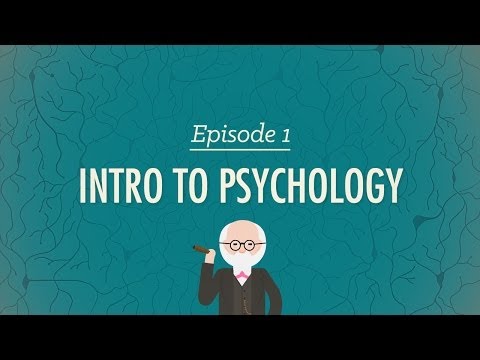
Why do we think, feel, and behave the way we do? What shapes our personality, influences our decisions, or causes us to act in ways we sometimes don’t fully understand?
These questions sit at the heart of psychology, the scientific study of behavior and mental processes. Psychology explores everything from consciousness and personality to mental illness, learning, relationships, and the biological processes that make thought and behavior possible.
But psychology didn’t emerge as a single, unified field overnight. Its history is shaped by centuries of questions, competing theories, groundbreaking thinkers, and different approaches to understanding the human mind.
The Origins of Psychology
Humans have been curious about the mind for thousands of years. Ancient thinkers such as Aristotle tried to understand the nature of consciousness, although some of their conclusions were very different from what modern science tells us.
Early approaches to understanding the human mind also appeared in other parts of the world. For example, Chinese rulers conducted psychological examinations more than 2,000 years ago, while Persian physician Muhammad ibn Zakariya al-Rhazes wrote about mental illness and treated patients in an early psychiatric setting.
Scientific psychology, however, began to take shape much later. In 1879, Wilhelm Wundt established the first psychology laboratory at the University of Leipzig in Germany, marking an important milestone in the development of psychology as a scientific discipline.
The Big Questions Psychology Tries to Answer
Psychology is concerned with some of the biggest questions about what it means to be human.
For example:
- How do our brains and minds influence our behavior?
- Do we have free will, or are our actions shaped by biology and our environment?
- What causes mental illness, and how can it be treated?
- What is consciousness?
- How do our experiences shape who we become?
- Why do we sometimes behave in ways we don’t consciously intend?
These questions demonstrate just how broad psychology is. Rather than focusing on one aspect of human experience, psychology draws on multiple perspectives and methods to investigate behavior and mental processes.
Freud and the Rise of Psychoanalysis
One of the most recognizable names in psychology is Sigmund Freud.
Freud’s work had a major influence on ideas about childhood, personality, dreams, sexuality, and the unconscious mind. His approach, known as psychoanalysis, proposed that people can be influenced by mental processes they aren’t consciously aware of.
Freud developed his ideas partly through his clinical work. After observing Josef Breuer use a “talking cure” with a patient known as Anna O, Freud began encouraging patients to talk freely about whatever came to mind, a technique known as free association.
In The Interpretation of Dreams, published in 1900, Freud developed his theory of psychoanalysis further. He argued that unconscious motives could influence personality and behavior, and that dreams, free association, and other techniques could help people gain insight into these hidden processes.
Although many of Freud’s ideas remain controversial, his influence on psychology was substantial, and psychoanalysis continues to be an important part of the history of psychological thought.
Different Schools of Psychological Thought
Psychology has never been defined by one theory or one method. Several major schools of thought emerged as researchers developed different ways of studying the mind and behavior.
Structuralism
Wilhelm Wundt and Edward Bradford Titchener developed an approach known as structuralism. They attempted to break conscious experience into its basic components, using introspection to explore people’s subjective experiences.
The approach ultimately faced a major limitation: inner thoughts and feelings are difficult to observe objectively, and different people can experience the same situation differently.
Functionalism
American philosopher and physician William James took a different approach. Instead of asking what consciousness was made of, functionalism focused on why we think, feel, and behave as we do.
Influenced by Charles Darwin’s ideas about adaptation and evolution, functionalism emphasized the function of behavior and mental processes.
Behaviorism
During the first half of the 20th century, behaviorism became another major force in psychology.
Researchers such as Ivan Pavlov, John B. Watson, and B. F. Skinner focused heavily on observable behavior and how behavior could be shaped through conditioning and environmental influences.
Psychodynamic Theories
Freud’s ideas also developed into a broader collection of approaches known as psychodynamic theories. These theories emphasized the importance of early experiences and unconscious processes in shaping thoughts, feelings, behaviors, and personality.
Psychology Today: An Integrative Science
As psychology developed, new approaches emerged, including humanistic psychology, cognitive science, and neuroscience. Each contributed different perspectives on the mind and human behavior.
Today, psychology is commonly defined as the study of behavior and mental processes. This definition reflects the field’s diverse history: psychologists study observable actions while also investigating the thoughts, feelings, and beliefs behind them.
The key idea is that psychology is an integrative science. No single approach can fully explain something as complex as the human mind. Researchers use different questions, perspectives, and methods to build a more complete understanding of behavior and mental processes.
Why Learn Psychology?
Studying psychology isn’t only about understanding theories from the past. It can also help us explore questions about everyday life, our relationships, our behavior, and ourselves.
Understanding psychology means exploring how our brains work, why we behave as we do, how mental processes can change, and what it means to think, feel, and be conscious. These questions connect psychology to many aspects of human experience.
Whether you’re beginning a psychology course or simply curious about how the mind works, understanding the foundations of the discipline is a useful place to start.
Watch the Video: Introduction to Psychology
Ready to explore the science of psychology in more detail?
Watch the video lesson to learn how psychology developed, discover the major schools of thought—including structuralism, functionalism, psychoanalysis, behaviorism, and psychodynamic theories—and get an introduction to the questions psychologists continue to investigate today.
Watch the video and begin your journey into the fascinating world of psychology.
Watch the video
Prefer to learn by watching?
Open the dedicated video page to watch this lesson.
Watch video →